Why Surface Preparation Makes or Breaks Your Epoxy Floor
Published April 20, 2026 • 5 min read
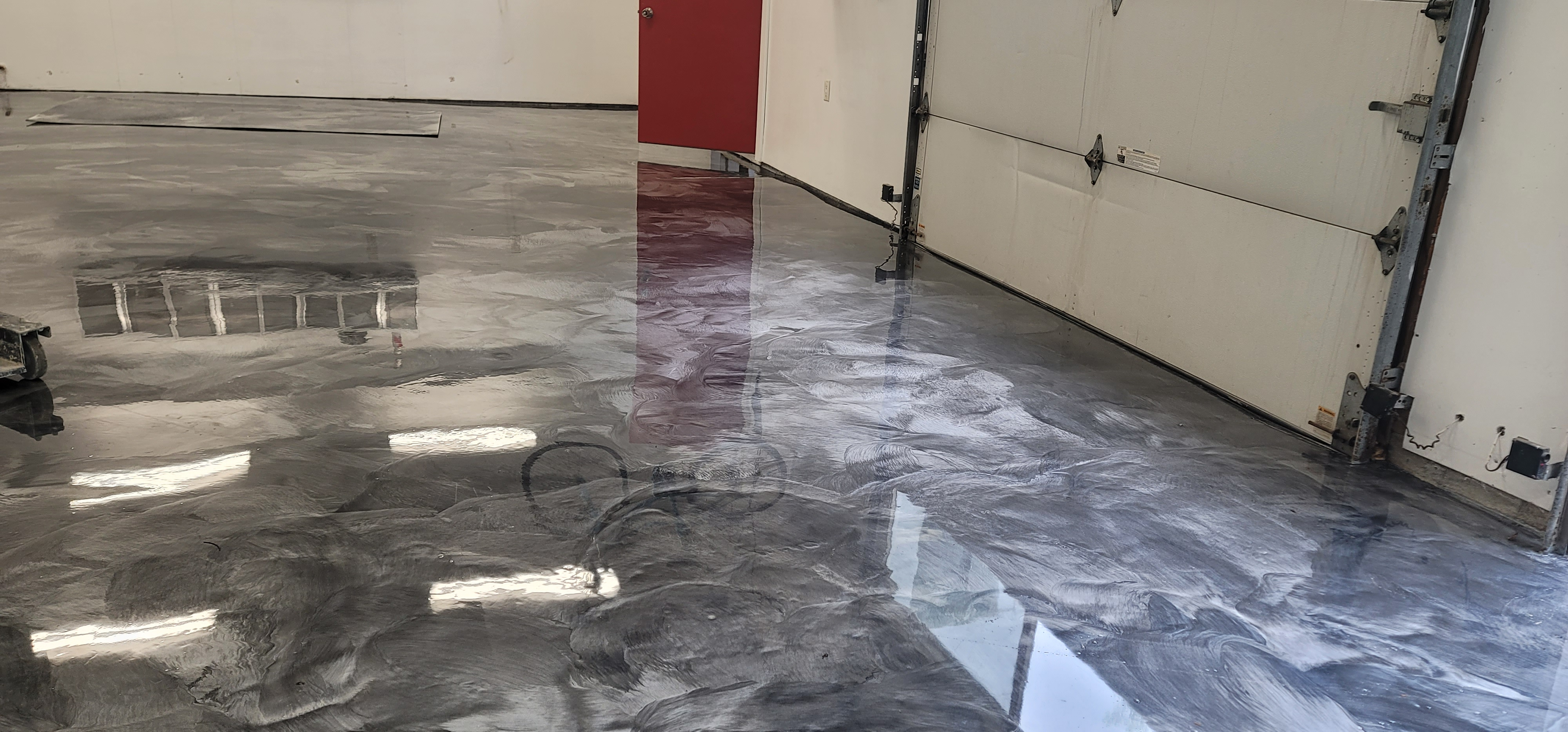
Ask any experienced epoxy floor installer what causes most failures, and you'll get the same answer every time: poor surface preparation. It's not the brand of epoxy. It's not the color. It's not even the applicator's technique. It's what happens to the concrete before a single drop of coating is applied.
Understanding this one principle will help you ask the right questions when getting quotes, avoid low-quality installers, and protect your investment from day one.
Why Concrete Can't Be Coated "As Is"
Concrete looks solid, but at a microscopic level, its surface is full of small pores and capillaries. When left unsealed or untreated, these pores are clogged with dust, curing compounds from the original pour, oil residue, and moisture. Applying epoxy directly over this contaminated surface is essentially trying to glue something to a dirty, powdery substrate — the bond simply can't hold.
Additionally, many concrete slabs have a smooth "cream" layer on the surface left over from the finishing process. This layer is weak and porous, and coatings applied over it will delaminate from this weak layer rather than bonding to the underlying solid concrete.
The Right Way: Mechanical Diamond Grinding
Professional installers use industrial diamond grinders to mechanically profile the concrete surface. This process:
- Removes the weak surface layer and any existing coatings or sealers
- Opens the concrete pores so the epoxy can penetrate and form a true mechanical bond
- Removes oil stains, curing compounds, and other contaminants
- Creates a consistent surface profile (measured in CSP — Concrete Surface Profile) that's optimal for epoxy adhesion
After grinding, the concrete is thoroughly vacuumed to remove all dust. Any cracks or divots are repaired with a concrete patching compound and allowed to cure before coating begins. This isn't a shortcut step — it's essential.
What About Acid Etching?
Some installers and all DIY kits rely on acid etching instead of grinding. Acid etching involves pouring a diluted acid solution onto the concrete to chemically rough up the surface. While it's better than nothing, it has significant limitations:
- It doesn't remove deep contamination or oil stains effectively
- It leaves behind salt residue that can interfere with adhesion if not perfectly neutralized
- The resulting surface profile is far less consistent than mechanical grinding
- It doesn't work well on older concrete or slabs that have been previously sealed
Acid etching is an acceptable shortcut for thin, decorative coatings in light-use areas. For any high-performance epoxy system that you want to last — especially in a garage — mechanical grinding is non-negotiable.
Moisture: The Hidden Enemy
One of the most overlooked aspects of surface preparation is moisture vapor transmission. Concrete slabs, especially in ground-level garages and basements, allow moisture to migrate upward from the soil beneath. When trapped under an epoxy coating, this moisture vapor creates hydrostatic pressure that pushes the coating off from below — causing bubbles and delamination that have nothing to do with the quality of the epoxy itself.
A professional installer will test for moisture before starting. If elevated moisture levels are present, a moisture-mitigating primer or coating system is used to address the problem before the main system is applied.
What a Red Flag Looks Like
When comparing quotes, watch for these warning signs that an installer may be cutting corners on prep:
- The quote doesn't mention or itemize surface preparation
- The installer says they'll use acid etching rather than grinding
- They offer a same-day installation without allowing time for prep and crack repair to cure
- The price is unusually low — quality prep work takes time and professional equipment
The Bottom Line
A beautiful epoxy floor starts at the bottom — with the concrete itself. The best materials in the world won't save a coating that was applied to unprepared concrete. When you invest in a professional installation, you're paying for the prep work just as much as the coating, and that's exactly where your money is best spent.
Always ask your installer what preparation method they use and how they handle cracks and moisture. Their answer tells you everything you need to know about the quality of the work you'll receive.
Get a Properly Prepared Floor
We use industrial diamond grinding on every job — no shortcuts. Get your free estimate today.
Get a Free Quote