Commercial & Industrial Coatings
Heavy-duty floor systems designed for performance, cleanliness, safety, and a professional appearance.
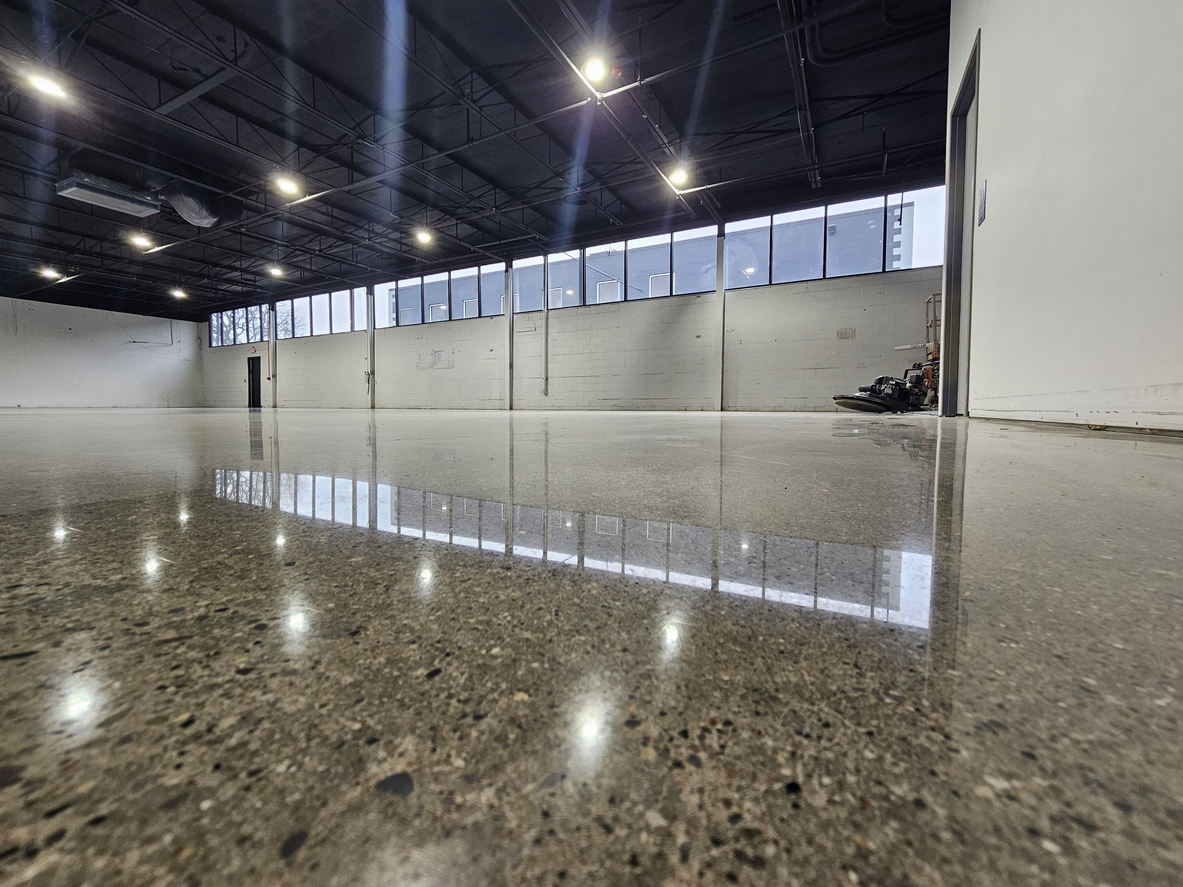
Commercial and industrial floor coatings are specialized systems made for spaces that experience much more traffic, impact, and wear than a typical residential floor. These environments may include warehouses, manufacturing areas, retail stores, restaurants, automotive facilities, healthcare spaces, showrooms, and service centers. In each of these settings, the floor is not just a background surface. It plays an important role in safety, daily operations, cleanliness, and overall presentation. That is why many property owners and facility managers choose coating systems that are built for demanding use rather than leaving concrete exposed.
At a basic level, these coatings are designed to strengthen and protect concrete. Uncoated concrete can absorb moisture, collect dust, stain easily, and begin to show signs of wear under repeated traffic. In commercial and industrial settings, those problems can multiply quickly because of forklifts, carts, equipment, pallet jacks, constant foot traffic, and spills from chemicals or cleaning products. A professionally applied coating helps create a sealed, more resilient surface that is easier to maintain and better suited to a busy work environment.
One of the biggest benefits of commercial and industrial coatings is durability. A floor in a warehouse or service facility has to hold up under ongoing pressure every day. Coating systems are often selected based on the type of use the space will see, whether that means impact resistance, abrasion resistance, chemical resistance, or a combination of all three. This allows businesses to choose a flooring solution that supports the work happening on the site instead of constantly fighting against damage, staining, or premature wear.
Cleanliness is another major reason these floors are so common in professional settings. A sealed surface is much easier to sweep, mop, and sanitize than raw concrete. In places where dust control matters, this can make a noticeable difference. In food-related, healthcare, or retail environments, a cleaner-looking floor also supports a more professional experience for customers, staff, and inspectors. Many businesses want a floor that helps reinforce the impression that the facility is organized, well-maintained, and operated with care. A coating system contributes to that by providing a smooth and uniform surface that is much easier to keep presentable.
Safety is also a key advantage. Floors in active workplaces can become slippery, hard to navigate, or visually confusing if the surface is worn and damaged. Many commercial floor systems can include slip-resistant additives or clearly designated striping to improve traction and organization. A floor coating can be used to define pathways, work zones, caution areas, or storage lanes. This helps create a more structured environment and may support safer movement for staff, visitors, and equipment operators.
Appearance should not be overlooked either. In customer-facing businesses such as retail stores, showrooms, salons, breweries, and office spaces, the floor has a big visual impact. A clean, consistent coating helps the entire facility look more finished and professional. Even in industrial settings where aesthetics may not be the top priority, a floor that looks maintained and intentional can contribute to morale and confidence in the workplace.
Overall, commercial and industrial coatings are valuable because they combine function with long-term practicality. They help protect concrete, support easier cleaning, improve safety options, and present a better overall image. Whether the goal is to handle heavy operational demands or simply create a more durable and manageable facility, these floor systems offer a flexible solution for a wide range of business environments. A well-chosen coating turns the floor into an asset that supports how the space operates every day.
Where These Coatings Are Commonly Used
Business Environments
- Warehouses and storage facilities
- Automotive shops and service bays
- Retail stores and showrooms
- Restaurants, kitchens, and food prep areas
- Healthcare and light manufacturing spaces
Common Benefits
- Improved resistance to traffic and abrasion
- Easier sweeping, mopping, and sanitation
- Options for slip resistance and safety striping
- A more professional and organized appearance
- Better protection for the underlying concrete